
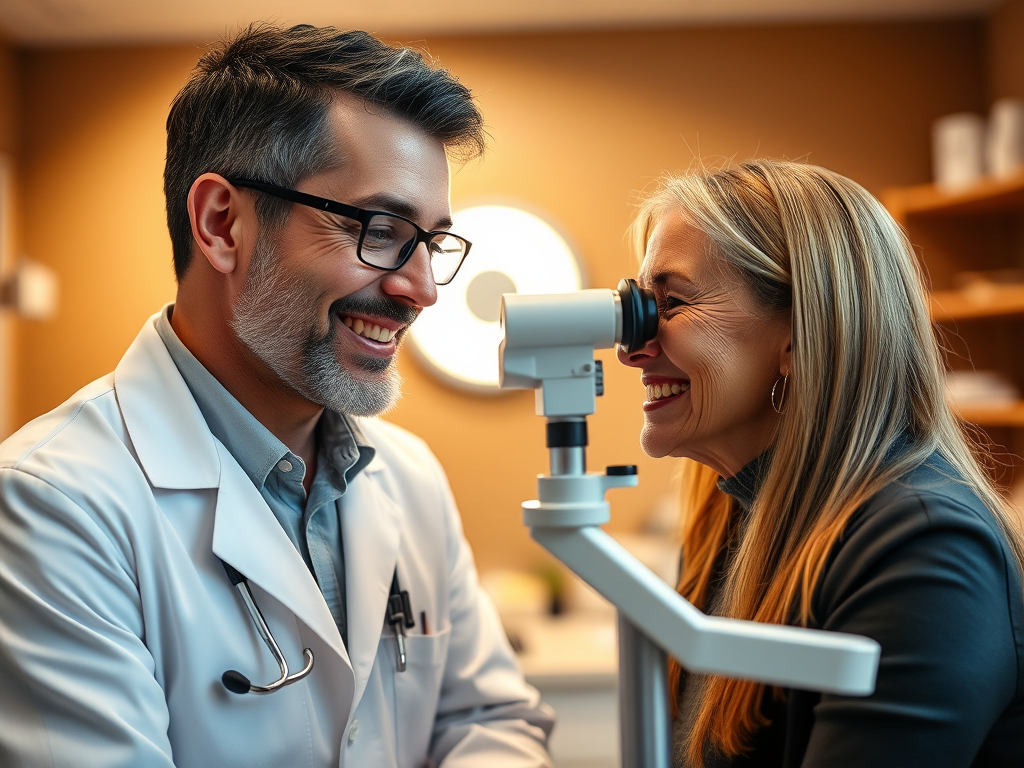
The future of ophthalmological care is set to be shaped by groundbreaking advances in technology, precision medicine, and integrated healthcare.
Our engineers Dongmin Yang, Chao Wei, Kody York and Aizhong Zhang are leading the development of Artificial intelligence (AI) driven ophthalmological care. AI and machine learning are already transforming the diagnostic process, enhancing the accuracy of image interpretation, and enabling earlier detection of conditions like diabetic retinopathy, glaucoma, and age-related macular degeneration. These technologies are not only improving diagnostic capabilities but are also poised to support personalized treatment plans based on an individual’s unique genetic makeup and risk factors.
Genomic medicine is another promising frontier, with gene therapies offering the potential to treat previously untreatable inherited retinal diseases and halt or even reverse vision loss.
Additionally, the field of regenerative medicine holds great promise, particularly with stem cell therapies that could repair damaged retinal tissue, offering new hope for patients with degenerative conditions.
Minimally invasive surgical techniques, powered by lasers and robotic technologies, are making eye surgeries safer and more precise, reducing recovery times and improving outcomes.
Telemedicine and remote monitoring are revolutionizing access to care, particularly in underserved or rural areas, allowing patients to consult with specialists and undergo diagnostic imaging from home.
Furthermore, wearable devices such as smart glasses equipped with augmented reality (AR) and virtual reality (VR) are being developed to assist with vision rehabilitation, helping patients with low vision navigate their environments more effectively. While these advancements are exciting, ensuring equitable access to these innovations and maintaining the human element in patient care will be key challenges.
As these technologies evolve, ophthalmology will become more personalized, efficient, and accessible, ultimately improving quality of life for patients worldwide.
 Welcome to Lightrino!